
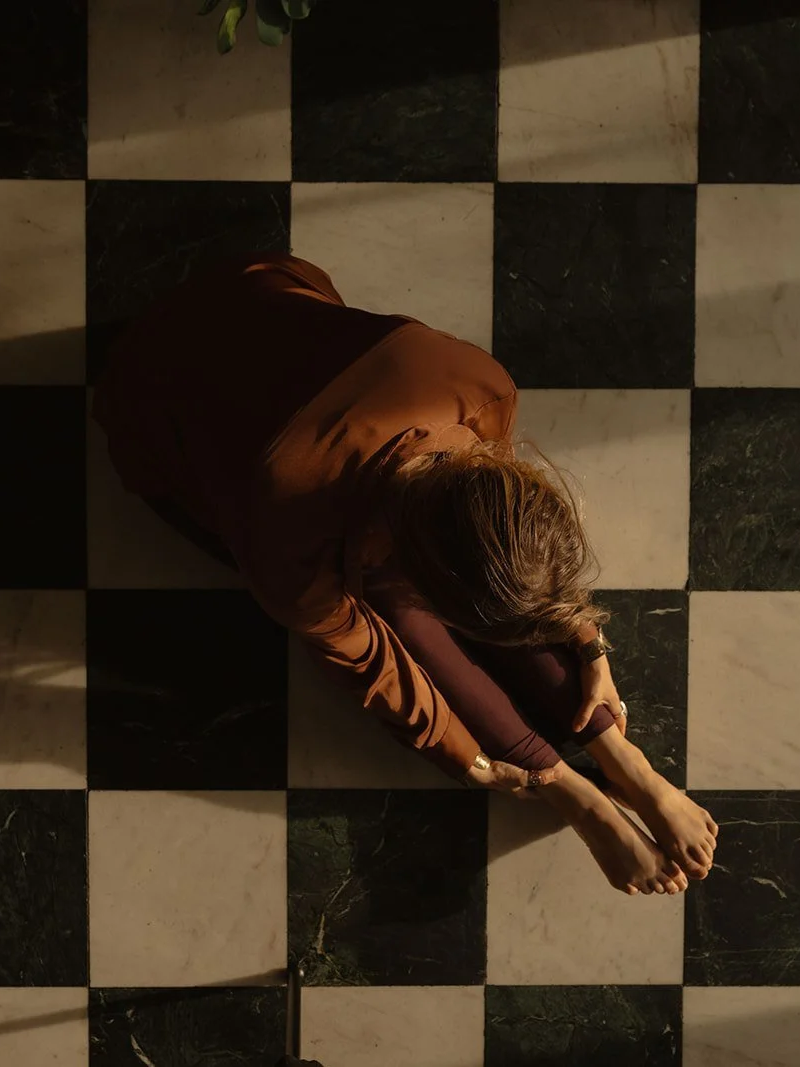
Stillness can serve different intentions. We may become quiet to explore sensation, to cultivate steadiness, or to discover what happens when we allow ourselves to be supported.
Yin and Restorative Yoga share an appreciation for this slower attention. Both invite us to pause long enough to notice the inner life. Yet they ask different things of the body.
Yin Yoga introduces a gentle, sustained stretch or load through relatively passive postures. Restorative Yoga arranges support to minimize effort and invite rest, without seeking a significant stretch.
Understanding the difference begins with a simple inquiry: What am I asking of my body, and what is my body asking of me?
Yin Yoga: Becoming Intimate with Experience
In Yin Yoga, we enter a posture gradually, allowing time to find an appropriate degree of sensation. We soften unnecessary muscular effort while remaining attentive to the physical stimulus the shape creates.
Postures are often held for several minutes. Within that time, sensation may change. So may our relationship to it.
We notice the impulse to deepen, the wish to leave, the subtle conviction that more must be better. These movements of mind become part of the practice field. We have an opportunity to meet them with curiosity before deciding how to respond.
The capacity we cultivate is discernment. Can we recognize the difference between a manageable stretch and a signal to change position? Can we adjust without interpreting the adjustment as failure? We remain available to experience, and available to move.
read more in the art of staying
Restorative Yoga: Learning to Receive Support
In Restorative Yoga, we attend to the conditions that allow effort to diminish.
A bolster receives the torso. Blankets support the head and limbs. We make small, deliberate adjustments until the body has less to manage. The intention is comfort and rest, with little or no deliberate stretching.
The preparation itself is an expression of care. Rather than asking the body to accommodate an ideal form, we arrange the form around the body.
Then we allow time.
spacious, gentle time.
As the outer activity quiets, we may discover how much activity continues within: planning, rehearsing, keeping watch. A part of us may remain uncertain about putting down its responsibilities, even briefly.
We can acknowledge that part with tenderness. There is no need to manufacture a peaceful experience.
Read more in Restorative Yoga: The Science of Stillness and Nervous System Repair.
The Props Do Not Define the Practice
A supported posture is not automatically restorative.
In Yin, a bolster may help us remain with a gentle stretch while reducing unnecessary strain. In restorative practice, that same bolster may be positioned to reduce the stretch itself.
Consider a reclining butterfly shape, with the soles of the feet together and the knees opening outward. Approached as Yin, the position might offer a manageable stretch through the inner thighs. Approached as restorative, the thighs receive enough support that they can rest without being drawn into a pronounced stretch.
The shape may look similar. Its intention—and our experience within it—can be quite different.
This is why the appearance of a posture tells only part of the story. We also need to ask: What is happening inside of my experience presently?
Which Practice Do You Need?
Our needs change. A practice that nourished us yesterday may ask too much of us today.
When we feel depleted, restorative practice may offer a welcome opportunity to be supported without adding another physical demand. When we have the capacity to explore a measured stretch and observe our responses, Yin may be appropriate.
Neither choice needs to become an identity. We can practice Yin and then rearrange our supports for restorative rest. We can arrive intending to stretch and discover that what we need is a blanket beneath the knees and permission to lie down.
In either practice, sharp pain, tingling, numbness, or increasing discomfort calls for a change. Duration is an invitation, never an obligation.
The deeper learning is to become less governed by what we believe practice should look like, and more attentive to what is actually unfolding.
Deepening the Art of Listening
Over time, this attention becomes a form of friendship with ourselves.
We learn when a little sensation invites curiosity and when we are quietly enduring. We recognize the difference between softening and collapsing, between remaining present and insisting that we stay.
The body becomes someone we are willing to hear.
In my Five Elements Yin & Restorative Yoga Teacher Training, we explore these distinctions through embodied anatomy, posture clinics, supported practice, and teaching inquiry. The Five Elements of Traditional Chinese Medicine, Buddhist mindfulness, and psychological self-inquiry offer complementary ways of attending to our inner experience.
We study how to practice—and how to offer practice—with greater sensitivity to the person, the moment, and the capacity available.