

the art of staying
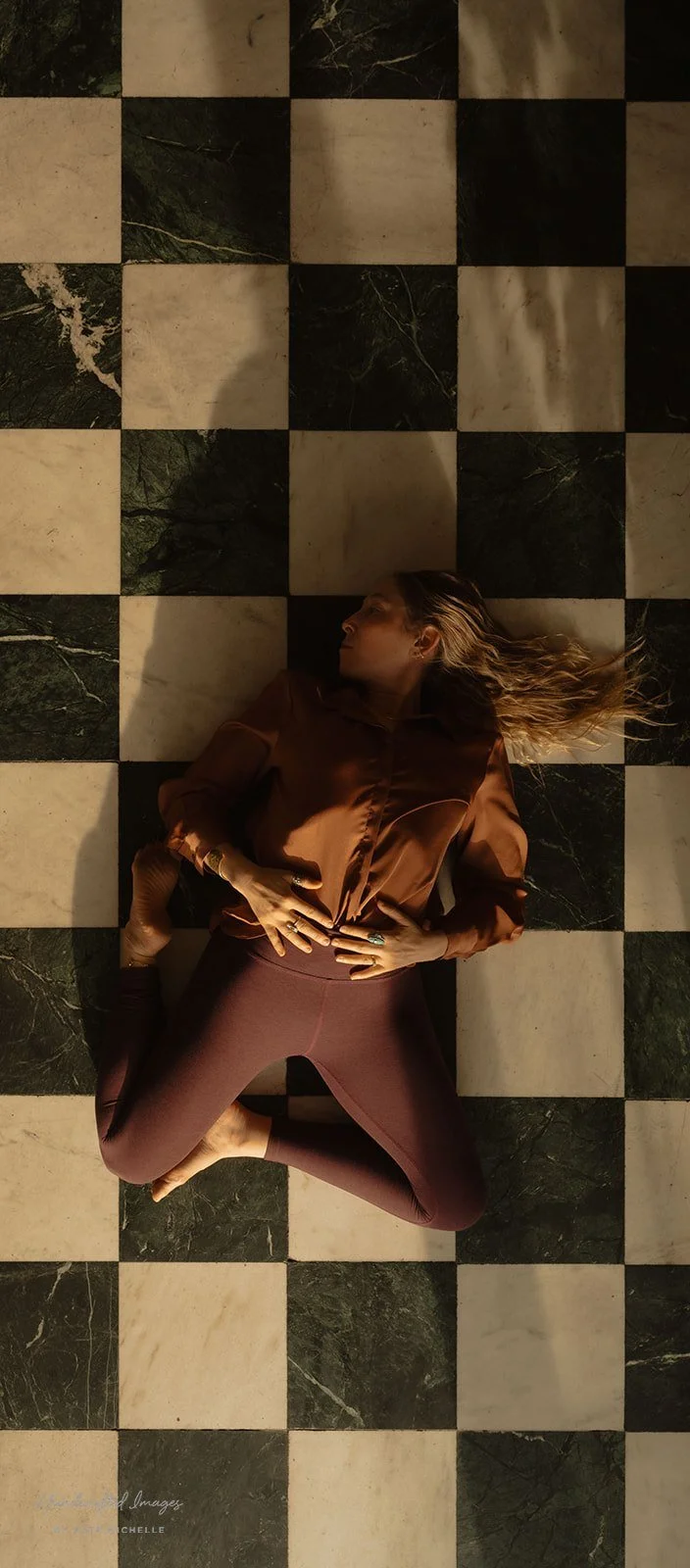
One of the things I love most about yoga is that every posture reveals far more than our physical capacity. The shape of the body becomes a doorway into our patterns of relating — how we respond when things are pleasant, how we respond when things are challenging, and how quickly we move toward grasping, resisting, or trying to change what is already happening.
Every pose is an encounter with sensation.
The body is constantly moving through waves of experience. A sensation arises, builds in intensity, reaches a peak, and eventually changes. Nothing remains fixed. Even the strongest sensations are part of a larger movement — appearing, transforming, and dissolving.
Yet when sensation becomes uncomfortable, particularly when it reaches its most intense point, our habitual conditioning often takes over. We may tighten around the experience, unconsciously believing that resistance will somehow make it easier. The jaw clenches. The breath becomes restricted. The mind begins telling stories about what is happening.
This is where the practice of mindfulness becomes so important.
Rather than immediately moving into resistance, yoga gives us the opportunity to become curious about our relationship with sensation. Can we remain present with intensity without creating an additional layer of suffering around it? Can we notice the difference between the actual experience in the body and the thoughts, judgments, and narratives that arise in response?
In Yin yoga, this becomes particularly clear because we are invited into stillness and longer holds. Without the distraction of constant movement, we begin to see ourselves more honestly. We notice our tendencies to push, to compare, to judge, to abandon the body’s wisdom in pursuit of some imagined ideal.
Sometimes we confuse effort with awareness.
Sometimes we mistake forcing for dedication.
But the practice is not about overriding ourselves. It is about cultivating a more intimate relationship with the body — learning when to soften, when to adjust, and when to simply stay present with what is arising.
A posture can become a place where we practice offering rather than fighting.
Instead of meeting sensation with the internal dialogue of “I need this to go away,” we begin to explore a different relationship: “Can I breathe with this? Can I allow this moment to be exactly what it is?”
This shift is subtle, but it changes everything.
When we stop organizing our experience around resistance, there is often a natural movement toward greater ease. The breath has more room. The nervous system receives a different message. The tissues of the body are no longer meeting the moment with the same degree of protection and contraction.
Ancient traditions have long understood the relationship between awareness and vitality. In Traditional Chinese Medicine, we might speak about the movement of Qi through the body’s pathways. In contemporary language, we might explore circulation, fascial hydration, interoception, and nervous system regulation. Different frameworks, perhaps, but all pointing toward the intelligence of a living system that responds to the quality of attention we bring toward it.
Where attention goes, energy follows.
The deeper lesson of Yin is not that discomfort disappears. Life will continue to bring moments of uncertainty, limitation, grief, change, and challenge. The practice is learning that we do not have to abandon ourselves in the presence of those experiences.
The posture is simply the place where we practice.
We practice staying connected.
We practice listening.
We practice meeting ourselves with enough kindness and awareness that even the difficult moments become part of the path.