

Self Energy in Internal Family Systems: What It Actually Feels Like
There comes a moment in nearly every sincere contemplative practice when the search quietly turns upon itself. We realize that what we have been seeking is not another insight, another technique, or even another experience. It is a different way of inhabiting our own lives. Internal Family Systems names this possibility Self. The word appears deceptively simple, almost too ordinary to contain what it points toward. We imagine Self to be a destination, a perfected state beyond conflict, or perhaps the culmination of enough healing. Yet the longer I live with this work, the less I understand Self as something we become and the more I recognize it as something that remains quietly present beneath every strategy we have developed to survive.

Richard Schwartz describes Self through the qualities of calmness, curiosity, compassion, clarity, confidence, courage, creativity, and connectedness. These have become beloved landmarks within the IFS community because they offer language for an experience that can otherwise feel elusive. Yet language, by its very nature, always arrives one step after direct experience. Long before we identify compassion, the body has already softened. Before clarity becomes a thought, breathing has changed. Before curiosity finds words, something within us has already leaned toward life rather than away from it. Self is not simply recognized by the mind. It is known somatically.
This question has become one of the quiet companions of my own practice. What does Self actually feel like? Not philosophically. Not psychologically. If all concepts were stripped away, how would the body know it had returned? Over the years I have come to trust that the organism recognizes Self before the intellect does. There is often an almost imperceptible settling, as though a flock of startled birds has finally landed after circling overhead for hours. Time feels less compressed. The breath finds its own depth without instruction. The body no longer braces against an imagined future. Nothing dramatic has occurred, and yet the entire field of experience has subtly reorganized itself.
Perhaps this is why contemplative traditions across cultures have placed such extraordinary emphasis on the body rather than the mind alone. Zen practitioners return again and again to hara, allowing awareness to descend into the lower abdomen until consciousness is no longer suspended exclusively behind the eyes. Taoist practitioners cultivate the lower dantian as a reservoir of vitality, not because energy resides there in some mechanical sense, but because attention itself begins to gather into coherence. Yogic philosophy speaks of the heart not merely as the seat of emotion but as the meeting place of wisdom and devotion. These traditions emerged independently, yet they seem to agree upon something profound: awareness is not confined to the brain. Human consciousness possesses geography.
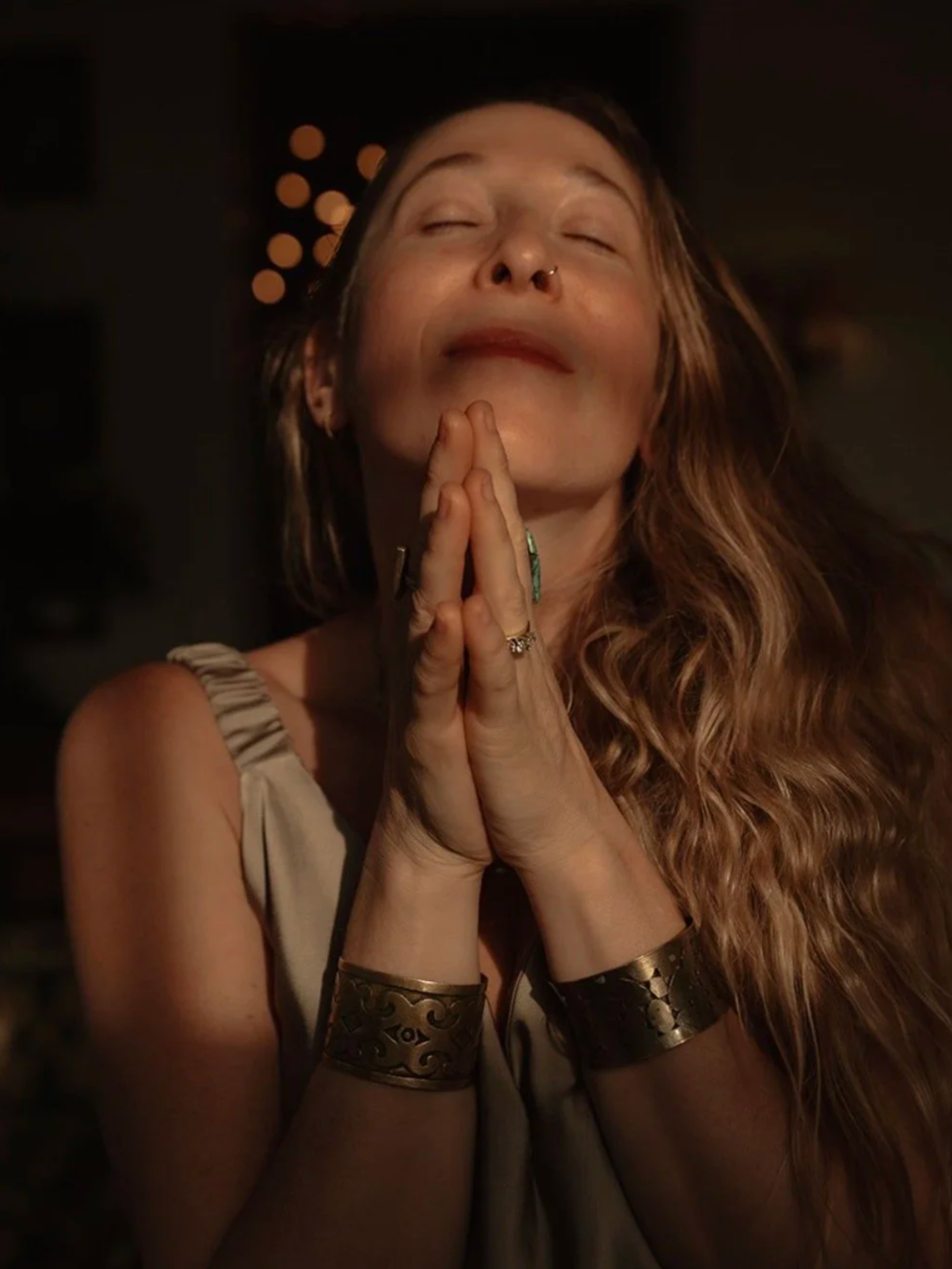
Over time I have found myself understanding Self through three great centers of knowing: the Head, the Heart, and the Hara. They are not separate entities but distinct expressions of one intelligence. The head offers discernment, the remarkable capacity to witness thought without becoming imprisoned by it. When Self is present, the mind continues thinking, but thought loses its compulsive quality. Ideas become spacious. There is room enough for uncertainty. The heart offers another dimension altogether. It recognizes relationship before judgment. Compassion ceases to feel like a moral achievement and becomes something far more natural, arising from the simple recognition that every protective strategy, no matter how exhausting or self-defeating, once emerged in service of preserving life.
Yet it is the hara that has increasingly become my teacher. The belly asks very little of us except that we arrive. It does not analyze experience or attempt to improve it. It receives. In Japanese traditions, hara is understood as the body's center of gravity, the place from which balanced action naturally arises. I often wonder whether this is also one of the most overlooked dimensions of Self. We speak eloquently about psychological spaciousness, yet the body itself quietly reveals when awareness has descended into a deeper center. The pelvis feels heavier upon the earth. The diaphragm moves with less interruption. There is less effort required to remain present because presence is no longer something being accomplished. It has become the atmosphere in which experience unfolds.
Students often imagine that Self must feel radiant or transcendent, but more often it possesses the unmistakable quality of simplicity. Grief may still be present, yet it no longer occupies the whole sky. Fear continues speaking, but it is no longer mistaken for the only voice within us. Anger arrives carrying its fierce intelligence without immediately demanding expression. Self does not eliminate the weather of the inner world. It simply offers a climate spacious enough for every season to belong.
This has become one of the reasons Yin Yoga and Internal Family Systems feel so deeply intertwined in my own teaching. Both ask us to remain with experience long enough for another relationship to emerge. A posture held for several quiet minutes inevitably introduces us to the parts that strive, resist, perfect, collapse, or flee. The practice is not to overcome these movements but to become intimate with them. Curiosity gradually replaces urgency. Listening replaces management. What initially appeared to be obstacles reveal themselves as protectors, each carrying a history worthy of compassion. The mat becomes less a place of stretching muscles than a place of meeting oneself.
Perhaps the greatest misunderstanding is that Self is something our parts must eventually achieve. Internal Family Systems suggests something far more hopeful. Self has never been damaged. It has never disappeared. It simply becomes obscured beneath the brilliant adaptations developed by a nervous system determined to survive. Like the clear sky concealed behind passing weather, its absence is only apparent. The work, then, is not one of construction but of remembering.
The longer I practice, the less awakening resembles ascent. For years I imagined spiritual life as a movement upward toward increasingly refined states of consciousness. Now it feels more like a continual descent—out of abstraction, out of performance, out of the restless brilliance of the thinking mind, and into the simple gravity of being here. The head continues offering its clarity. The heart continues opening toward relationship. The hara continues anchoring awareness in the living body. Together they become less a philosophy than a way of inhabiting the world, a quiet integration in which wisdom is no longer something we possess but something that gently moves through us.
When Self is recognized in this way, it feels strangely familiar. Not because we have finally arrived somewhere new, but because we have stopped leaving the place from which we have always belonged.