

Why Stretching Isn’t the Point: The Real Purpose of Yin Yoga
Yin Yoga is frequently misunderstood as a form of passive stretching. While this interpretation is not entirely incorrect, it is incomplete in a way that limits both the practice and its outcomes.
To understand Yin Yoga more accurately, we need to distinguish between muscular stretching and connective tissue adaptation, and then go one layer deeper into the role of the nervous system in mediating both.
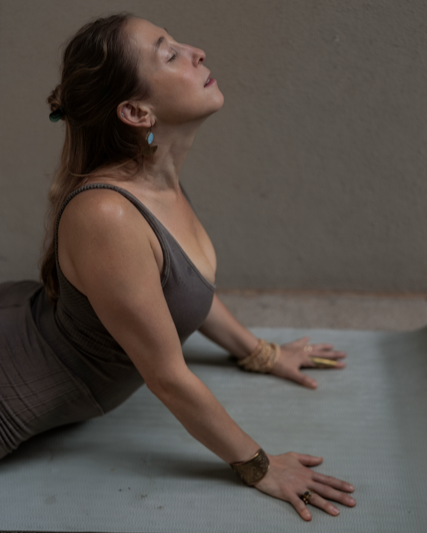
Traditional stretching primarily targets muscle tissue, which is elastic, vascular, and responsive to short-duration loads. Muscle length can change relatively quickly, and the sensation of stretch is often used as a marker of effectiveness.
Yin Yoga operates on a different principle.
The primary tissues being influenced are fascia, ligaments, and joint capsules, collectively referred to as Yin tissues. These structures are less elastic and more plastic, meaning they respond to slow, sustained loading over time. The intention is not to force change, but to invite it through duration and appropriate stress.
However, even this biomechanical explanation does not fully capture the practice.
Tissue does not change independently of the nervous system.
The nervous system continuously evaluates whether a given stimulus is safe. If a stretch is perceived as threatening, the body responds with protective contraction, limiting the very change the practitioner is attempting to create. This is why pushing deeper into a pose often results in diminishing returns or even injury.
Yin Yoga, when practiced skillfully, addresses this by altering the context in which stress is applied.
The combination of long duration, low intensity, and relative stillness creates conditions that the nervous system can interpret as non-threatening. Over time, this reduces protective guarding and allows for more meaningful adaptation within connective tissue.
In addition, the practice enhances interoception, the ability to sense internal states. This is not simply a byproduct but a core component of Yin Yoga’s function. Increased interoceptive awareness improves a practitioner’s ability to modulate intensity, recognize thresholds, and engage with sensation in a more refined way.
This is where Yin Yoga begins to intersect with therapeutic modalities.
Rather than using the body as an object to be changed, the practitioner engages the body as a system to be understood. Sensation becomes information rather than an obstacle. Stillness becomes a method for observing how the system organizes under load.
From this perspective, the goal of Yin Yoga is not increased flexibility, although that may occur.
The goal is improved adaptability.
Adaptability of tissue, adaptability of the nervous system, and adaptability of attention.
This is why the most advanced Yin practitioners are not necessarily the most flexible, but the most responsive. They can sense subtle shifts, adjust appropriately, and remain present within a wide range of experience.
Stretching may be one outcome of Yin Yoga.
But it is not the point.
The point is to create a body and nervous system that can change without resistance and respond without reactivity.